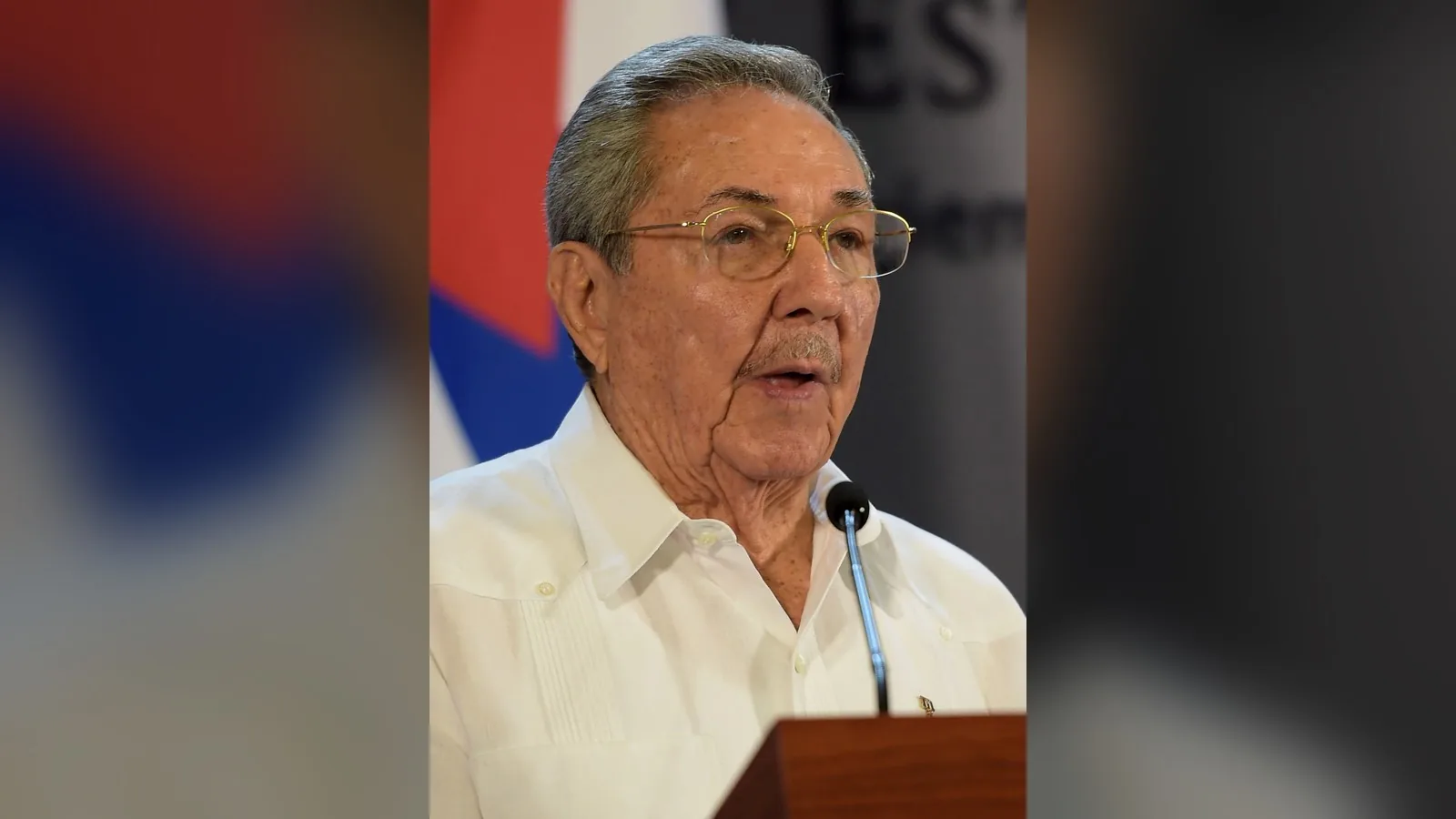
More than 30 years after four men died over the Florida Straits, the state of Florida has charged former Cuban leader Raúl Castro in their deaths. Castro has not been convicted of any crime, and the charge is an accusation that has not been tested in court.
On Monday, Oct. 19, Florida officials announced a state arrest warrant charging Castro with one count of conspiracy to commit first-degree murder, a first-degree felony. The court ordered no bond.
A Miami story with world stakes
This case starts close to home. According to the Florida affidavit, the two Brothers to the Rescue Cessnas that were shot down on Feb. 24, 1996, took off from Opa-locka Airport in Miami-Dade County, a short drive from Miami Gardens.
The four men killed were Carlos Costa, Pablo Morales, Mario de la Peña and Armando Alejandre Jr. Three were U.S. citizens and one was a legal permanent resident.
The Florida affidavit alleges that Cuban MiG fighter jets downed the planes over international waters. Cuba says that the shootdown happened in Cuban airspace and was an act of self-defense, according to China's state news agency Xinhua. Cuba has long maintained the planes violated its airspace; U.S. authorities and an international investigation concluded they were shot down over international waters, the Miami Herald notes.
The affidavit also alleges, according to a summary from the Florida Department of Law Enforcement (FDLE), that Cuban intelligence agents in Miami-Dade and Monroe counties, known as the "Wasp Network," infiltrated the group and passed along flight plans.
How the warrant came together
The warrant was signed by Chief Judge Ariana Fajardo Orshan of Miami-Dade's Eleventh Judicial Circuit. The Miami Herald reports it was signed on Friday, Oct. 16, and announced Monday at the FIU College of Law.
It adds to a federal case announced on May 20. That indictment charges Castro with seven counts, including four counts of first-degree murder. Five Cuban military pilots are also charged in the federal case.
Florida Attorney General James Uthmeier spoke with confidence about the warrant, as quoted by the Miami Herald. "It's not just a piece of paper," he said. "If he ends up in a friendly country for whatever reason with extradition agreements, then he will end up here."
Miami-Dade Sheriff Rosie Cordero-Stutz said in the FDLE release: "Today's action sends a clear message: the passage of time does not diminish the value of these lives or our responsibility to pursue accountability."
Cuba pushes back
Havana rejected the move. Cuban President Miguel Díaz-Canel wrote on X, as reported in English by Xinhua: "This reprehensible action against the Army General this morning in a pathetic Miami circus, with an electoral backdrop, has no, nor will it ever have, the slightest legal sense and even less practical sense."
Cuban Foreign Minister Bruno Rodríguez also condemned the warrant on X, calling it a "new sterile maneuver by the anti-Cuban politicians of South Florida against Army General Raul Castro Ruz," Xinhua reported.
Questions about the timing
The announcement landed on the first day of early voting in Miami-Dade County. Uthmeier, a Republican, faces Democrat José Javier Rodríguez on Nov. 3. Rodríguez accused him of using the Castro prosecution for political purposes, the Miami Herald reports, and FIU professor Eduardo Gamarra told CBS Miami he thought it was "a great political show."
Asked why he waited until Monday to announce a warrant signed the previous Friday, Uthmeier said, "We announced the arrest warrant today the minute we could get our law enforcement officials together." He did not directly address the allegation of political motivation, the Herald reported.
Can Florida actually bring him to court?
That's the open question. As the Miami Herald's analysis notes, a Florida state warrant does not on its own require any other country to arrest Castro or send him to the United States.
For families who have waited decades, the warrant is a formal step toward the accountability they've sought. For critics, it's a campaign-season headline. Either way, the case remains an accusation, and any trial depends on whether Castro ever stands in a U.S. courtroom.
Sources
- FDLE press release, published Oct. 19, 2026; accessed Oct. 20, 2026: https://www.fdle.state.fl.us/news/2026/october/icymi-attorney-general-james-uthmeier-secures-state-arrest-warrant-for-raul-castro
- Miami Herald (Antonio María Delgado), published Oct. 19, 2026; accessed Oct. 20, 2026: https://www.miamiherald.com/news/nation-world/world/americas/cuba/article317685349.html
- NBC 6 South Florida, published Oct. 19, 2026; accessed Oct. 20, 2026: https://www.nbcmiami.com/news/local/cuba/miami-judge-signs-state-arrest-warrant-for-raul-castro-in-brothers-to-the-rescue-shootdown/3874611/
- Xinhua, published Oct. 19, 2026 (6:48 PM ET); accessed Oct. 20, 2026: https://english.news.cn/20261020/49cfff49cba74c0cb6491b32e643f4c4/c.html
- CBS Miami, Oct. 19, 2026 (updated 11:31 p.m. ET), accessed Oct. 20, 2026: https://www.cbsnews.com/miami/news/raul-castro-new-arrest-warrant-brothers-to-the-rescue-shootdown/